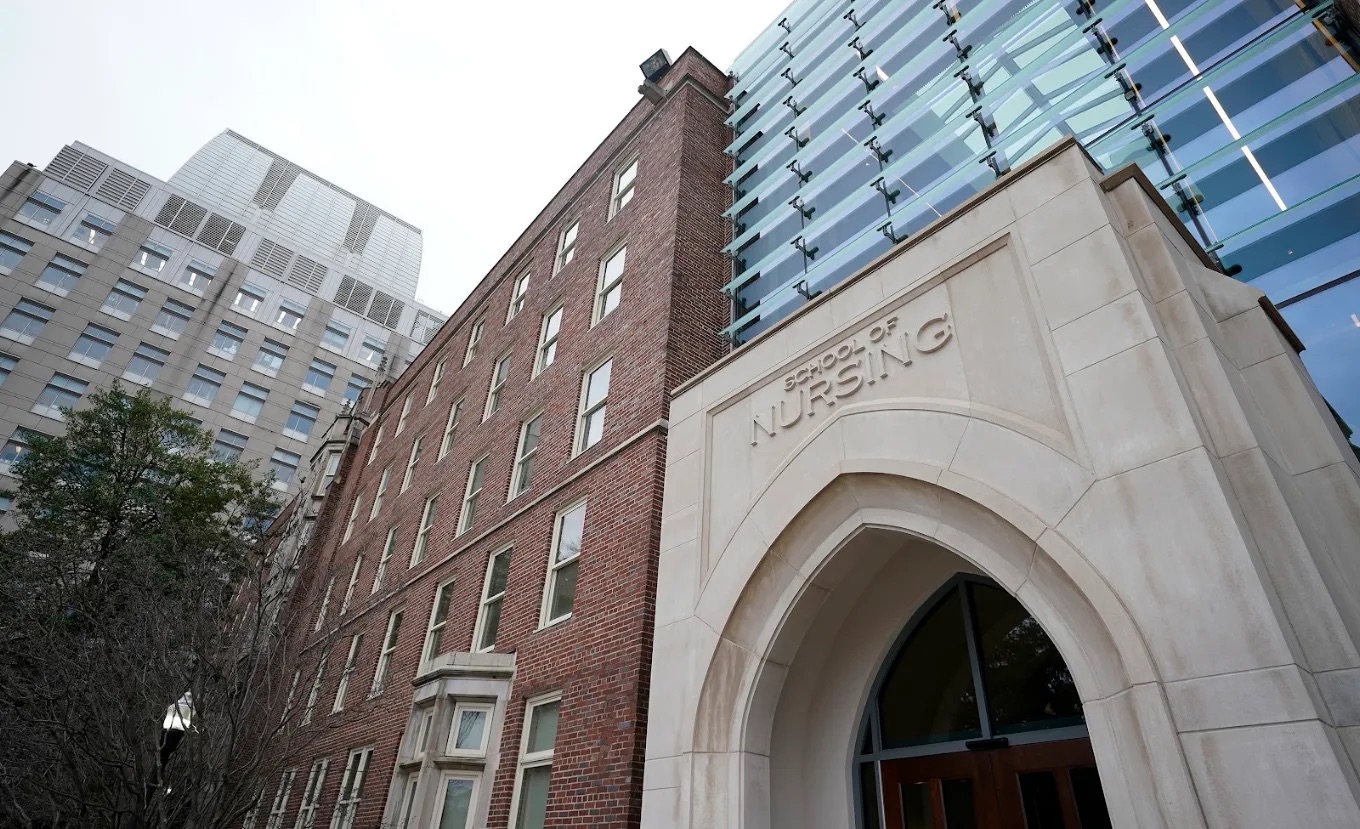
Vanderbilt University School of Nursing (VUSN) is a nursing school in Nashville, ranked No. 5 among master's nursing programs in U.S. News & World Report's 2026 Best Nursing Schools list. The school has been exclusively graduate-level since 1989, so every program, faculty appointment, and clinical partnership here is built around advanced practice. Faculty remain practicing clinicians, which keeps coursework aligned with how care is actually delivered, and clinical placements draw on Vanderbilt University Medical Center and the wider Nashville health system network. Whether you are entering nursing from another field or deepening an established practice, there is a defined path here.
VUSN offers graduate nursing programs for several different starting points.
Application requirements differ by program, and you apply to one specialty rather than several
Vanderbilt School of Nursing - Nursing School - Nashville, Tennessee
The MN is the entry point for people with a bachelor's degree outside nursing. It is a four-semester path to becoming a registered nurse, covering the coursework and clinical hours you need to sit for the NCLEX-RN and graduate as a master's-prepared RN. If you already know you want to practice at the advanced level, the MN Prespecialty track continues directly into a specialty instead of stopping at RN licensure. Format is full-time and on campus, with clinical placements across Nashville.
The MSN is for BSN-prepared registered nurses who are ready to specialize. You choose from 13 specialties spanning nurse practitioner roles, nurse-midwifery, and nursing informatics, and most run online or hybrid with brief on-campus sessions a few times during the program. Nursing informatics is fully online, and nurse-midwifery begins with face-to-face coursework that decreases as the program progresses. Full-time students finish in four to eight semesters, part-time students in seven to nine, and a new class starts each fall. VUSN reports that 97% of graduates are employed in advanced practice nursing after graduation.
The DNP is the terminal practice degree for nurses who want to shape how care is delivered rather than only deliver it. If you already hold a master's, the advanced clinical, systems, and executive leadership tracks run 36 credit hours across five to six semesters while you keep working full-time. Coursework includes 500 hours of practice integration and a DNP project, with an on-campus intensive in Nashville of roughly three to four days each semester. BSN-to-DNP entry is available in all specialties, and nurse anesthesia is its own track with a separate structure, as described below. Your DNP project is built inside your own practice setting, so the work you do in the program is work your organization keeps.
As part of the DNP, the Nurse Anesthesia program runs full-time, in person, for 36 months across 9 semesters, covering 90 credits and 2,500 clinical hours, with a late-May start. Clinical training comes through Vanderbilt University Medical Center, and graduates are eligible to sit for the national certification exam to become certified registered nurse anesthetists. The program is accredited by the Council on Accreditation of Nurse Anesthesia Educational Programs. Because the program is in person and full-time for three years, students should plan on stepping back from clinical employment during it.
Neonatal Nurse Practitioner is one of VUSN's specialties, and it prepares you to manage the care of critically ill and premature newborns in NICUs, delivery rooms, and special care nurseries. Coursework covers neonatal physiology, pharmacology, and advanced assessment, paired with clinical hours in neonatal intensive care settings under faculty who practice in the specialty. Graduates sit for national NNP certification and step into teams making time-sensitive decisions for the smallest patients in the hospital.